
The Million Dollar Smile
Bridging the gap between high fashion luxury and bold street style, grills have been popularized as a defiant fashion statement for decades. But it is more than just a shimmering accessory. It is an extension of one’s identity. Recently, we have seen the massive resurgence of 2016 maximalist fashion and early 2000s tooth gem sets. However, this is not just a modern trend, and one must look beyond the grills of celebrities and fashion week. By investigating the history of grills, it is discovered that there has been a rich yet brutal evolution from ancient times to the jewel-encrusted mouthpieces of the modern age.
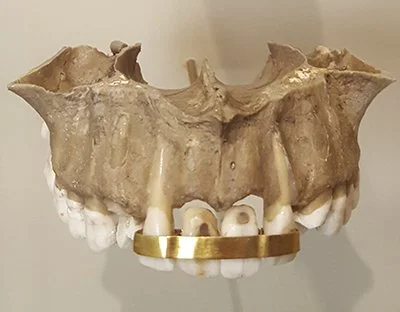
Photo/richgrillz
The Ancient World
One may assume that the Egyptians created the prototype for the modern grill (I know I did). After all, gold and jewels seemed to be a focus in their cultural attire. However, it actually originated from Italy. The Etruscans were an ancient civilization from what is now known as modern Italy. They lived there from around 800 B.C. to 200 B.C., and when they were conquered by the Roman Empire, the region they lived in was named Tuscany, based on the Etruscan name. As the Romans took over, most Etruscan writing and documentation were erased. Therefore, most archaeologists have based their knowledge on this ancient civilization from excavated tombs. Archaeologists began digging in Rome in the 1800s and found that multiple sets of excavated teeth were woven in thick, gold wire. The earliest findings date back to the seventh century B.C. Most of the teeth were from wealthy Etruscan women and were done for decoration. These gold bands were usually woven and inserted into their front teeth. Before the Roman Empire took over, Etruscan women held equal rights and were able to own property and attend events or spaces that the Romans would have deemed strictly for men. Besides being for decoration, these gold grills were a symbol and statement that women were social and economic equals of their male counterparts. Once the Romans took over, the Etruscan culture was banned, and by A.D.100, the teeth that had once empowered the rights of women were gone.
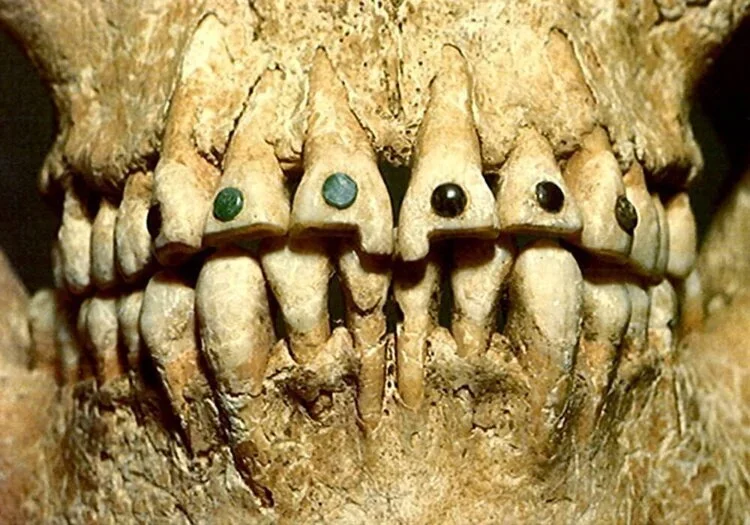
Photo/archeologynow
While the Etruscans valued gold, the Mayans sought after a different precious medium: jade. During A.D. 300 to A.D. 900, the ancient Mayans used jade in their traditional masks, art and teeth. Mayan grills, like Etruscan grills, were also designated for the wealthy people of their nation. Kings and queens would drill holes into their upper teeth and fill these holes with tiny, carved pieces of jade. While these gems served as a symbol of social status and were believed to enhance physical attractiveness, the choice to use jade was a calculated political statement. Historically, the Mayans were advanced in water irrigation systems and agriculture for that time period. Green was the color of agriculture and sustenance. So, by wearing green jade in their teeth, royals had made a promise to their citizens to bring prosperity to their land. However, history repeated itself in the 16th century. Just as the Etruscans were forced to abandon their traditions by the Romans, the Mayan culture of wearing jade was eclipsed during the Spanish conquest of Mesoamerica.
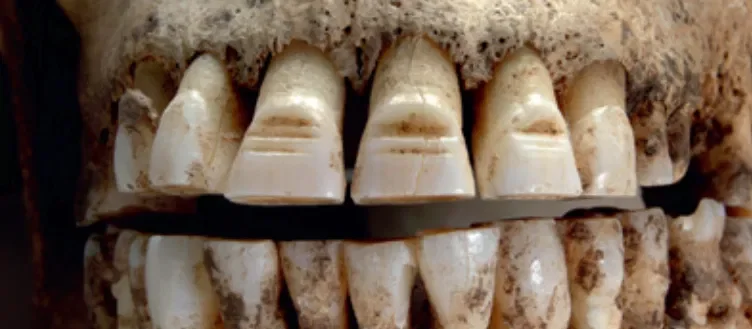
Photo/Medivalists
The Vikings had a grittier approach to modifying their teeth. Rather than inserting gold or jade, they would carve horizontal ridges into their front teeth instead. The ridges were thought to create a look of unity for the Vikings, but they also served an additional purpose as a strategic look of intimidation to the regions they were invading. Expanding the map to Southeast Asia, it is found that gold is thought to be a spiritual medium. Filipinos would decorate their teeth with metal and gold as early as the 13th century. These cultural practices were again stopped and discarded when Spanish conquistadors came in the 1600s.

Photo/Encyclopedia
Japan, Vietnam and other parts of Southeast Asia also blackened their teeth as a symbol of high social status or maturity. This black dye doubled as an effective sealant for the teeth long before medical practices began protecting against decay and cavities.
Scientific Discovery
Starting from the Middle Ages to the Renaissance, there has been evidence gathered of doctors publishing notes on how to combat tooth decay. By the 1800s, doctors developed a porcelain crown that could cover a decaying tooth, although it was highly delicate and had to be replaced continually. In the modern era, the porcelain crown has been developed into a strong medium for dental restoration that looks like the end result of ancient civilizations before.

Photo/nr
The Modern Grill
Ironically, the modern grill you see on MTV, the Grammys and other red carpets did not come from millionaires. They came from the neighborhoods of impoverished immigrants who came to the U.S. in the 1970s. Countries like Jamaica and Vietnam were navigating a tumultuous economic era, and there wasn’t much funding for dental care. So, they turned to using gold as a functional way to replace and cover decayed teeth. As they began immigrating to the U.S., gold teeth began showing up in minority neighborhoods, especially in New York. From these minority communities came rappers, artists and designers who reclaimed gold teeth, once used for dental repairs, into a cultural accessory. By the 1980s, stars and regular people began to elevate the idea of grills from just gold caps to jewel-encrusted fashion statements. The designs for grills continue to expand as celebrities such as A$AP Rocky, Lil Yachty, Kylie Jenner, Flavor Flav and more have become notorious for opulent mouthpieces filled with engravings, diamonds, rubies, etc.
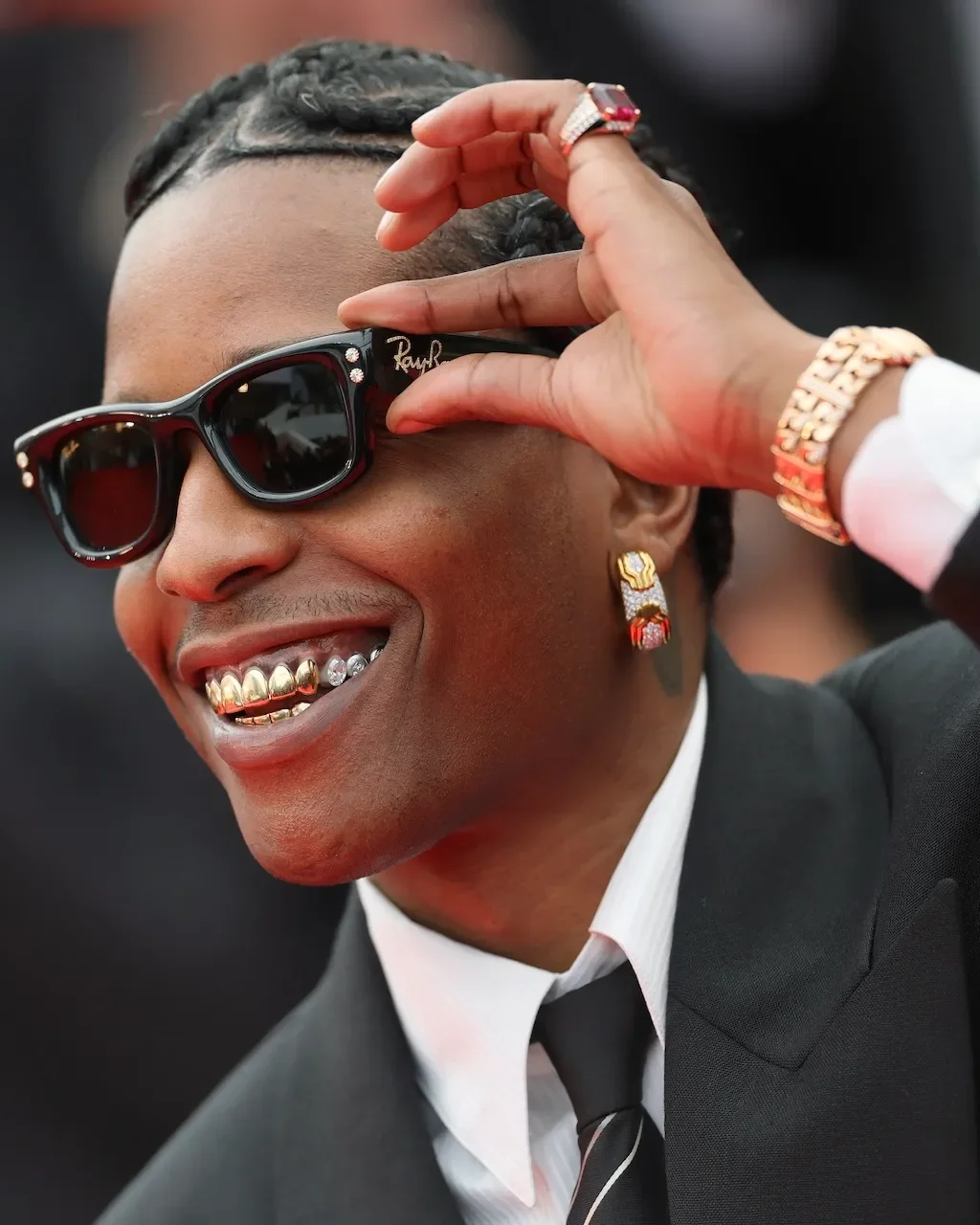
Photo/naturaldiamonds
While in modern times the grill is seen as a symbol of wealth and stylistic expression, its true symbolic nature is that of cultural resilience. They are a testament to the endurance of ancient empires that went through violent invasions and attempts at cultural erasure. It is also a testament to the grit of immigrants coming to the U.S. who turned an act of survival into artistic craftsmanship. Grills are a defiant symbol that sends the message that no one, not even Caesar, can silence your expression and identity.
Editor: Sydney Annis
Graphic: Sarah Chastain