
Szilveszter Makó: Our Need for Novelty
Who is Szilveszter Makó?
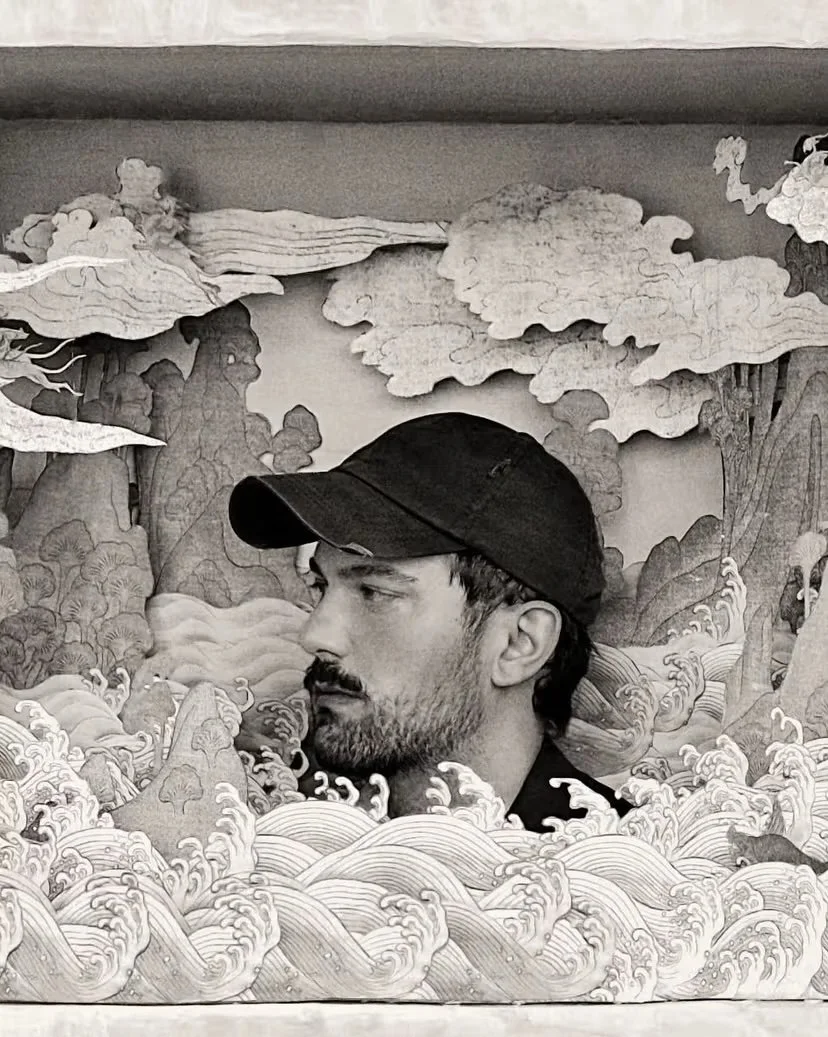
Photo/Cosmos
With theatrical clothes and cohesive colors that draw the audience into the Renaissance, Szilveszter Makó uses striking silhouettes and contour lines to define his work. Born in a small Hungarian town of Lillafüred and now based in Milan, Makó has shot to stardom in recent years, backed by decades of experience. Lillafüred, located in the Bükk Mountains, artistically inspired Makó as he played by rivers and stone castles in his youth. He draws his vibrant use of color from the remote village of Yunnan, where elderly women wrap themselves in rich, brilliant fabrics that vividly contrast against the gray stone of the village.
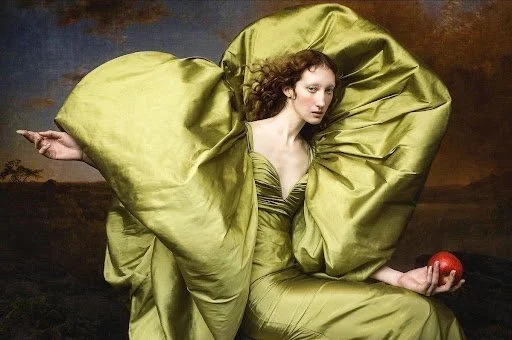
Photo/Pinterest
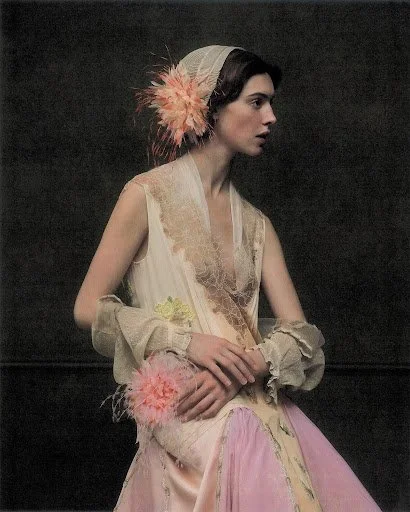
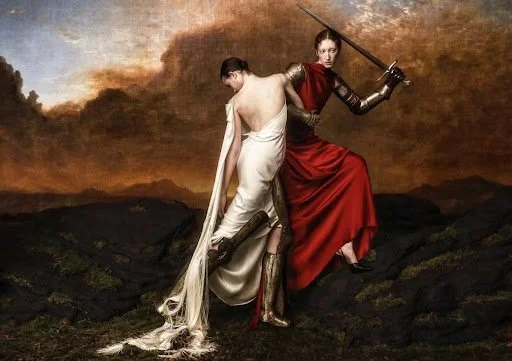
Makó’s style is so distinct that the audience can immediately recognize his work, which seamlessly transforms humans into two-dimensional art that is anchored to the page. His fascination with this ethereal aesthetic began at age 15 when he took a long-exposure photograph of a girl that left her looking translucent. Captivated by this otherworldly non-human quality, he leaned into the signature style he has today. He credits his physics teacher for helping him find photography as a medium. While fine art remains a profound passion of Makó, he admits he found himself impatient with its slow creation process. He prefers the immediacy of photography, where his vision of “fine art” could instantly appear. Before committing to photography, Makó studied psychology, driven by his fascination with the interior states of mind. Today, his work is an expression of what he finds beautiful, a canvas that reflects what he observes and consumes when engaging with art. Makó relies on unconventional techniques to create his distinct look. Referencing old-school editing techniques, he wants the set to be as natural and tangible as possible. Assistant artists painstakingly hand-paint each cardboard background, carefully applying every brushstroke. The cardboard sets are usually constructed into boxes, much like in Makó’s eyes, a chessboard. Rather than feeling restrictive, the rigid grid of the box anchors and calms him, bringing sharp clarity to his vision for each shoot.
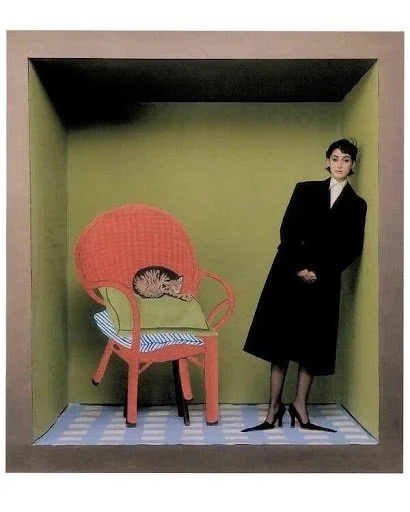
Photo/thejuggernaut
For his set designs, he usually uses recycled and handmade materials, pairing them with natural daylight to illuminate his subjects. He avoids flash photography, preferring to wait or reshoot until the sun casts the exact light he needs. To amplify the two-dimensional effect, his models often lay flat against the painted backgrounds, dressed in designer pieces by Schiaparelli, Maison Margiela, Prada, Bottega Veneta and more.
The Critique
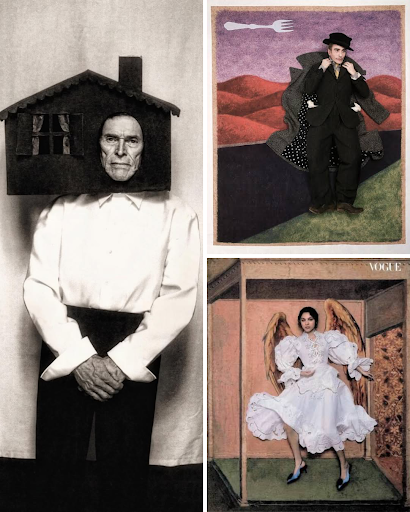
However, the models themselves might be the controversy for Makó. The motivation behind this blog stems from a recent wave of Instagram posts and articles questioning Makó’s standing as an artist following his sudden mainstream surge. Headlines and critics openly questioned whether his signature style had become oversaturated by celebrity subjects, with audiences expressing fatigue after seeing the repeated aesthetic. Despite being in the fashion world for more than a decade, his commissions have become increasingly more high-profile, with subjects ranging from Michelle Yeoh, Bad Bunny, Cate Blanchett, Rama Duwaji, Willem Dafoe, Rihanna and other A-List celebrities.
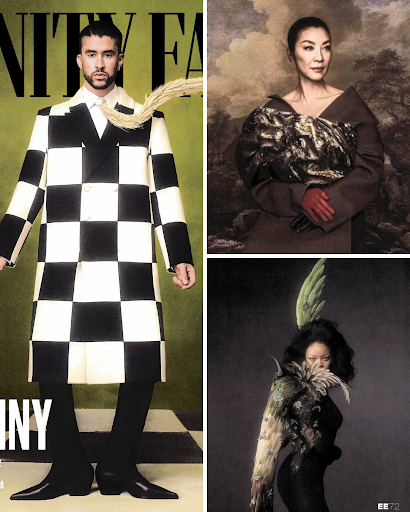
When we stand in museums and view early artists, we still view their work in awe after decades or even centuries. Pablo Picasso is celebrated for cubism, Claude Monet for impressionism, Salvador Dalí for surrealism and Mark Rothko for expressionism through his famed color abstractions. So, why is it that Makó’s signature style is suddenly being labeled as too repetitive and predictable when we celebrate these early artists’ styles still to this day? Despite being brilliant artists, were Picasso, Rothko, Monet and Dalí not also fundamentally predictable themselves?
Our Need for Novelty in the Digital Age
Photo/Instagram
The challenge of Makó’s rise as a high-profile photographer lies in how his work is consumed in the digital age. People don’t have to subscribe to magazines or slowly digest paintings in quiet galleries to see his work; it fills their social media feed every day. Humans have always craved novelty; after all, that is how we allow our curiosity to make new discoveries. However, in an era of mindless scrolling and copious amounts of information, that craving has been hyper-amplified. There are three types of curiosity according to psychology: epistemic curiosity, empathetic curiosity and diversive curiosity. Diversive curiosity is about seeking novelty and stimulation for its own sake. “It’s the urge that drives people to scroll endlessly through social media, providing a quick, fleeting sense of satisfaction,” as noted by Feed Magazine. Seeing a striking Makó image for the first time triggers a burst of dopamine. But as users keep scrolling and encounter that same distinct style repeatedly, the novelty fades, the dopamine wears off and viewer fatigue sets in. Where gallery walls demand slow, reverent observations to glimpse a master’s scarce collection, Makó’s art exists in abundance online. According to the University of Copenhagen, tech companies like Google, Facebook and Apple compete for its audience’s attention. Their platforms present the audience with a bounty of addictive content, which leaves audiences distracted, shrinking their attention spans and decreasing our capacity to deeply appreciate art. Consider how we consume news today: viewers could see a protest, a coup, natural disasters, shootings and more, all just to read it once and scroll. Strangely, it doesn't feel like there’s ever huge breaking news that we have read or sit around the television for anymore. Observe news sites: major events dominate headlines and screens for a few weeks, and then the next month, it's like it never happened. It’s not because they're unimportant, but it's because our attention moves onto the next stimulus. It's not like Picasso is still updating his Instagram saying, “New cubist painting just dropped! Go check it out!” But Makó and other sites are doing that.
Photo/The Greatscape
It’s not that Makó needs to change his style. His artistic style is what defines him just as the many brilliant artists before him. We must learn to pause the endless scroll and take the time to truly sit with art, sit with stories and sit with ourselves. Only then can we begin to fully appreciate the profound beauty humanity is capable of creating.
Editor: Sydney Annis
Graphic: Adi Sawhney